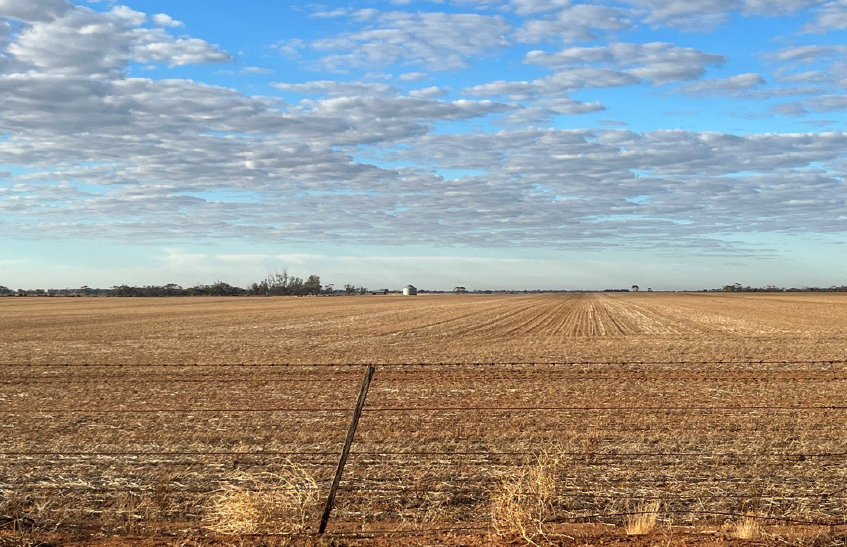
A four-year project is underway focusing on addressing a key challenge for Mallee farmers – maintaining groundcover at the level required to protect their most valuable resource: soil.
Implementing changes that support increased groundcover and overall soil stability has always been a priority for farmers managing the region’s light sandy soils, particularly in dry years when the risk of wind erosion increases and careful management is required to ensure that on-farm (e.g. soil health) and broader community (e.g. dust storm) impacts are minimised.
As the impacts of climate change become more evident (i.e. increased rainfall variability and temperatures), identifying alternative or modified practices that provide for climate-ready systems and effective responses to seasonal conditions will be critical to achieving regional groundcover targets and to the long-term sustainability of Mallee farming.
Project delivery will help address this challenge by focusing on two key drivers of groundcover and associated soil health outcomes in low rainfall cropping systems: stubble and legume management, while also monitoring how current management practices are influencing groundcover levels across the region.
Read the Climate Smart Agriculture for Soil Health and Productivity Benefits factsheet.

This project is funded by the Australian Government’s Natural Heritage Trust and delivered by the Mallee CMA, a member of the Commonwealth Regional Delivery Partners Panel.