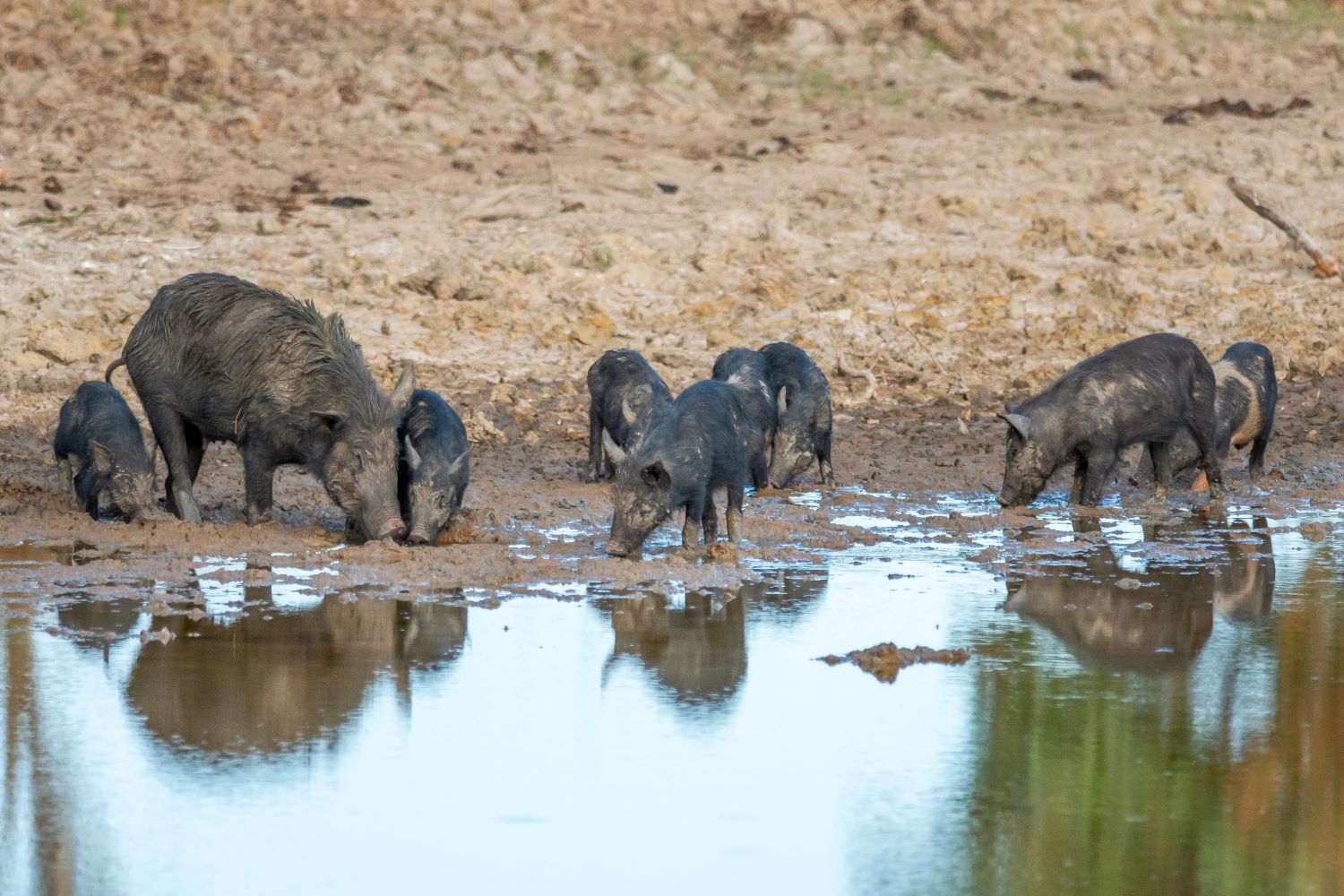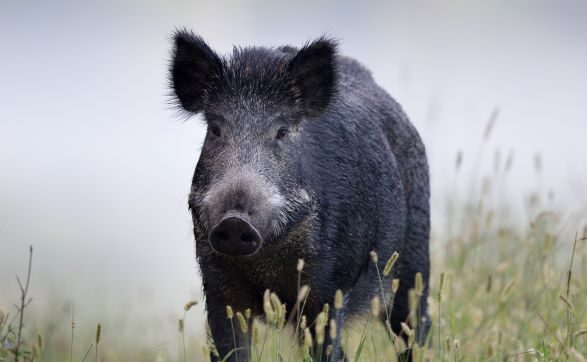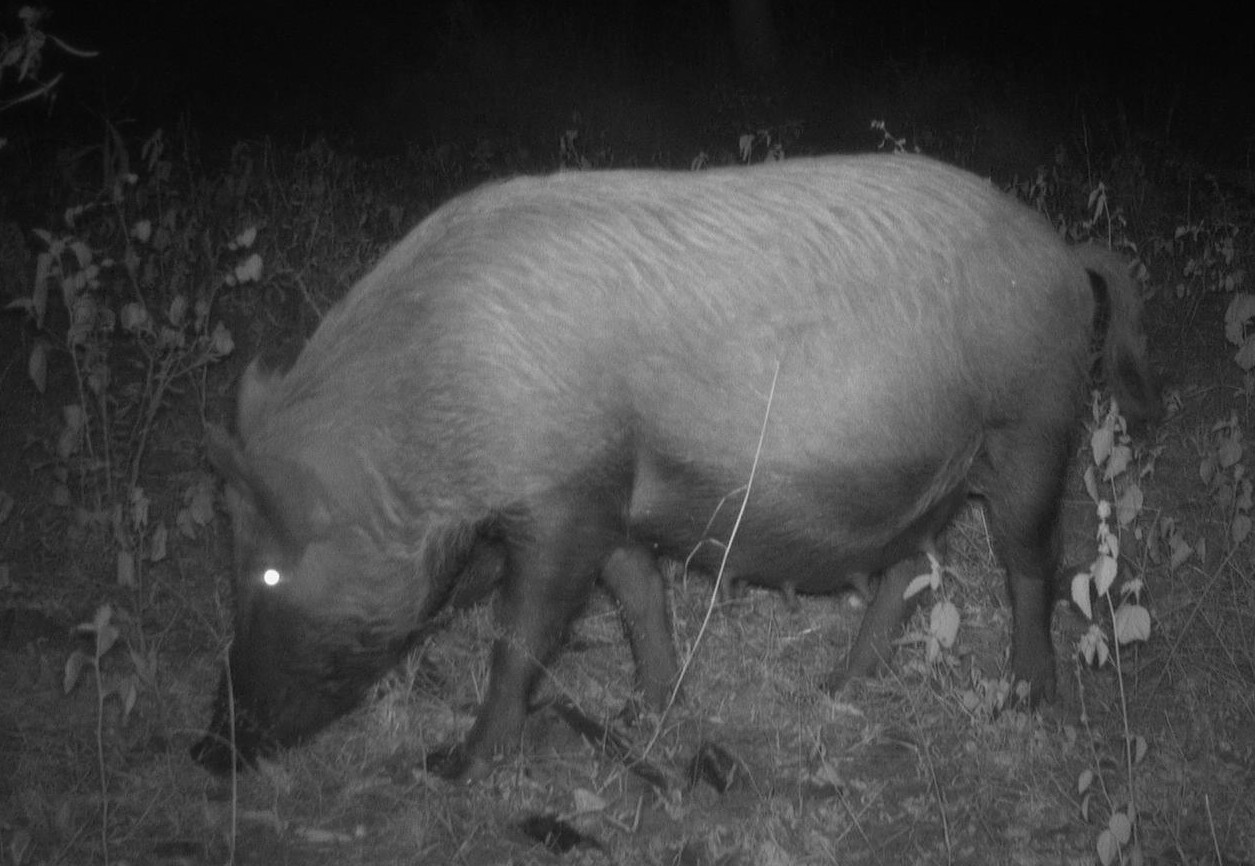
Feral pigs pose a significant threat to wetland health in the semi-arid Southern Gulf region, where freshwater resources are limited and highly vulnerable. Because pigs lack sweat-glands, they rely on surface water to regulate their body temperature. This draws them to water sources such as wetlands, where they have a negative impact on the health of waterways.
The wallowing and rooting behaviours of feral pigs reduce water quality through sediment pollution from erosion, and through excess nutrients and faecal bacteria from defecation and urination. They destroy riverbank vegetation, causing further erosion and removing food sources for some wetland species. Additional impacts on wetland species include disturbance of their habitat, such as pigs trampling bird nests and consumption of eggs.
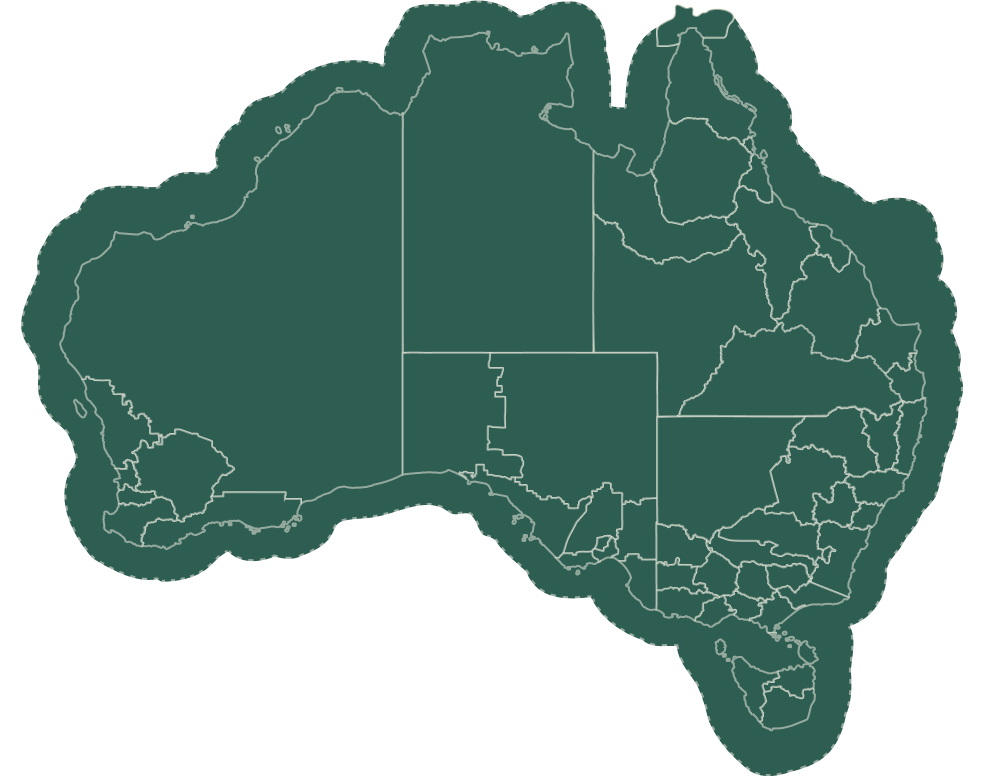
The project will work with 10 properties throughout the region to humanely destroy feral pigs, reducing pig numbers and their impacts on waterways. The project will improve wetland health across 50ha, with benefits extending over many more hundreds of hectares downstream.
This project is funded by Queensland Government’s Natural Resource Management Expansion Program.