
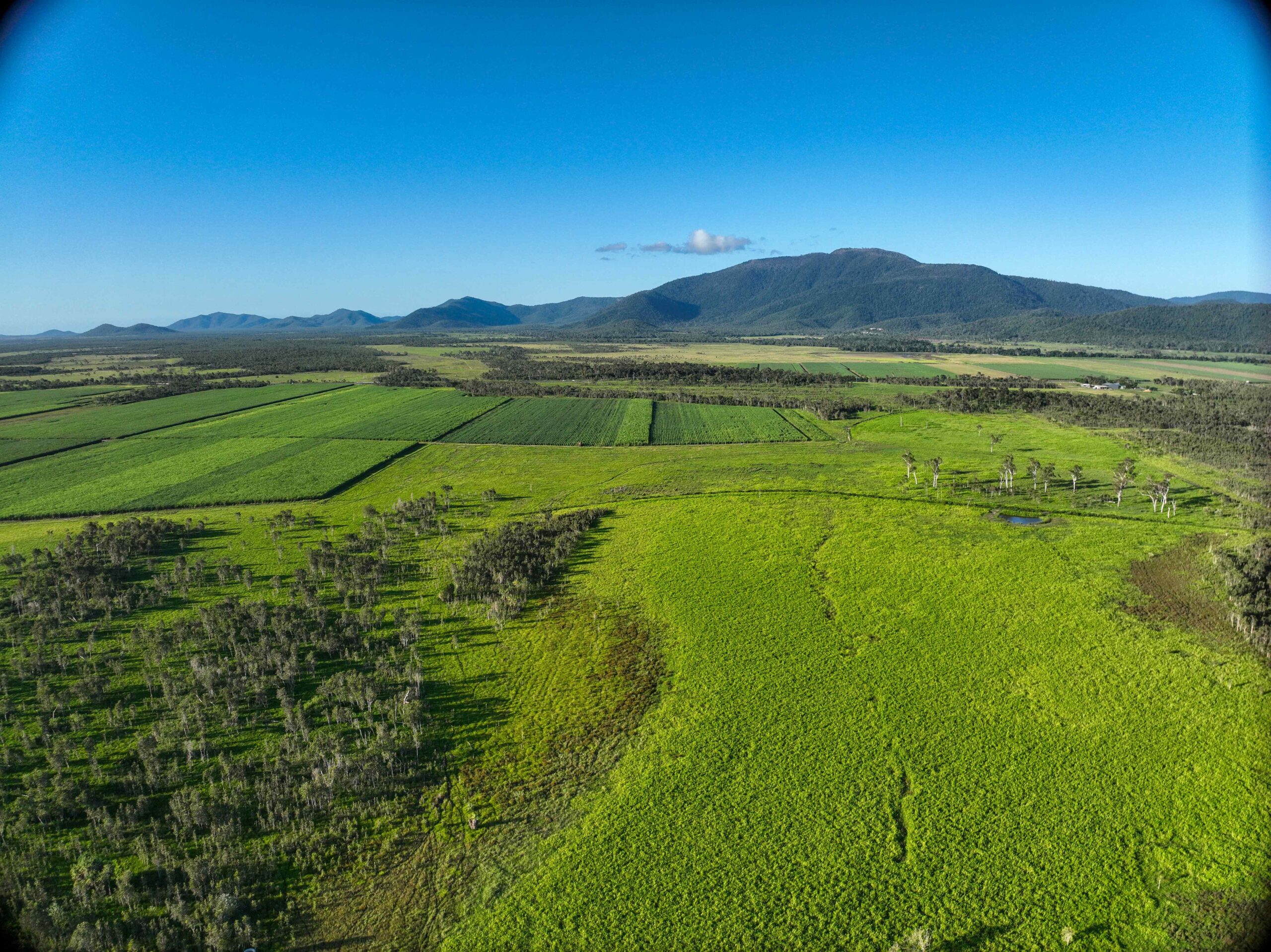

PIP is a three-year initiative (2024–2027) delivered by Reef Catchments as part of the Queensland Government’s Reef Water Quality Program. It brings together seven interconnected projects to address the complex drivers of water quality decline in the Proserpine catchment.
The project targets key pollutants such as dissolved inorganic nitrogen (DIN), sediments and pesticides through a combination of innovative technologies, on-ground works and behaviour change. This includes AI-driven weed control, circular economy approaches using aquaculture, and installation of catchment treatment systems to capture and reuse runoff.
A defining feature of PIP is its collaborative approach. Landholders, researchers, industry and community stakeholders co-design solutions tailored to the region’s environmental, social and economic context. The project also integrates natural capital opportunities and investment pathways to support long-term sustainability outcomes
By combining science, innovation and local knowledge, PIP aims to deliver lasting improvements to water quality and catchment health while strengthening the resilience and profitability of local farming systems.
- Biofiltration Solutions: Harnessing water quality improvement through circular economy approaches led by the aquaculture industry.
- Proserpine Catchment Sustainability Plan – using a whole-of-system, values-based framework
- Catchment Treatment Systems : reducing pollutants such as dissolved inorganic nitrogen (DIN) and total suspended solids (TSS) in priority catchment areas.
- Autoweed: Reducing pesticide use using AI
- Supporting practice change to reduce water quality risk
- Circular Opportunities for the Proserpine System: Tracing the movement of pesticides and dissolved inorganic nitrogen (DIN) through the Proserpine catchment, from source to reef.
- Supporting Investment In Natural Capital