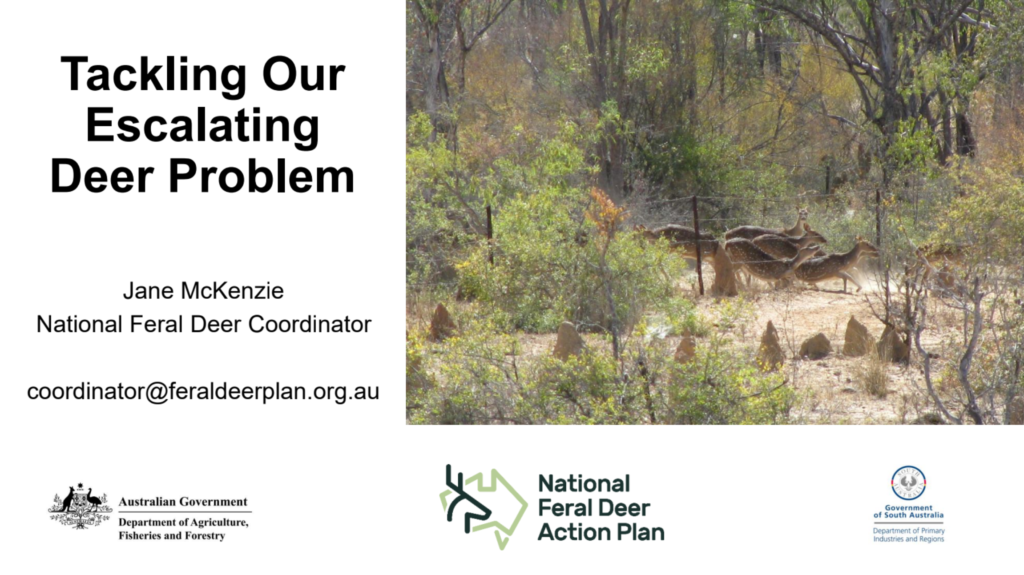
Featuring case studies from community to state level, showcasing collaborative planning, strong leadership, and community-driven programs.
2B – biosecurity
Australia’s feral deer population has surged to 1–2 million in just two decades, causing major damage to farmland, increasing road accidents, and threatening native species. The National Feral Deer Action Plan (2023–28) aims to reduce these impacts before control becomes unaffordable.
Strategic, landscape-scale management in rural and peri-urban areas is essential. New technologies—like thermal-assisted aerial culling (TAAC), environmental DNA (eDNA), and AI—are enhancing control efforts.
This presentation features case studies from community to state level, showcasing collaborative planning, strong leadership, and community-driven programs. Building social license through tailored engagement is crucial, especially when using lethal methods. Cross-tenure cooperation and public support are key to removing more deer than are born each year. Reversing population growth and eliminating satellite groups is vital to halting the spread and protecting Australia’s natural and agricultural landscapes.
Watch the video from the presentation here.