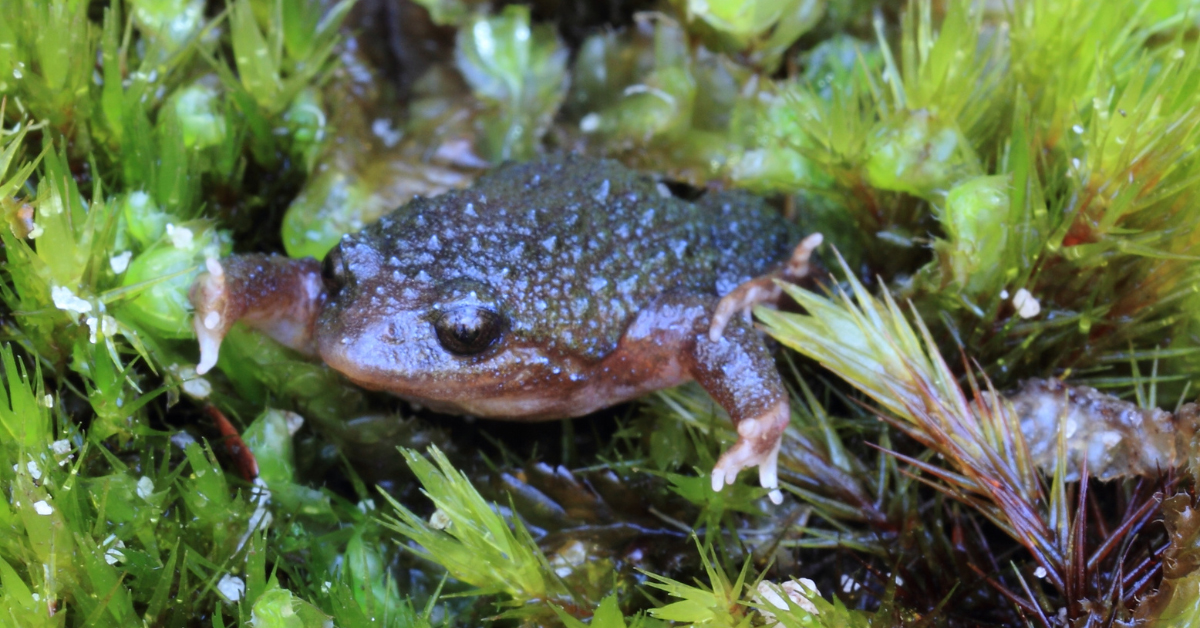
South West NRM, in partnership with WA’s Department of Biodiversity, Conservation & Attractions (DBCA), is using a combination of sprinklers and satellites to save one of Australia’s tiniest amphibians, the white-bellied frog (Anstisia alba), from extinction.
National listed as critically endangered – the white-bellied frog is found in one small patch of habitat near Margaret River in Western Australia. Adult frogs grow to about the size of a human thumbnail and its babies are no bigger than a Rice Bubble.
The species is barely hanging on as climate change dries out the shallow muddy depressions where it lives and breeds. But through this project and the efforts of an extensive Recovery Team, we’re fighting back with low-tech sprinklers and high-tech sensors and satellite monitoring to keep moisture in the ground.
Soil monitoring in a carefully watered trial area about half the size of a basketball court is showing early signs of “so far, so good” but ongoing data collection will occur to determine trial success.
Unlike many other frogs, white-bellied frogs live their entire lives on land. Females lay their eggs in burrows in the soil, within a wet depression, making the drying climate an existential threat.
That’s where our rehydration project’s sprinkler system comes in. The automated system sprays enough water over a 5×10 metres patch to keep it moist enough for the frogs to breed. Sensors in the soil send moisture data to our scientists via satellite, allowing us to track conditions remotely and compare them with a nearby site that isn’t being watered.
Over time, the data will be used to assess the success of the project and potentially provide evidence-based insights on a technique that can also be applied to save other threatened species.

This project received grant funding from the Australian Government Saving Native Species Program.
“This frog is extraordinary for many reasons and we cannot afford to lose it. We don’t actually know the role every species plays in an ecosystem. When things start to disappear – we don’t know how big the flow on effect will be. Ensuring everything stays as intact as possible – that’s how we keep ecosystems healthy and build resilience to things like climate change.”