
Tasmania is increasingly at risk from more extreme and frequent floods, fires and drought. In the face of these disasters, NbS can strengthen community resilience and mitigate disaster impacts. In this project, Tasmania’s three regional NRM organisations are evaluating the effectiveness of past riparian management works that were implemented for flood recovery and resilience, and transferring this insight to scale up the adoption of NbS in other flood-affected areas.
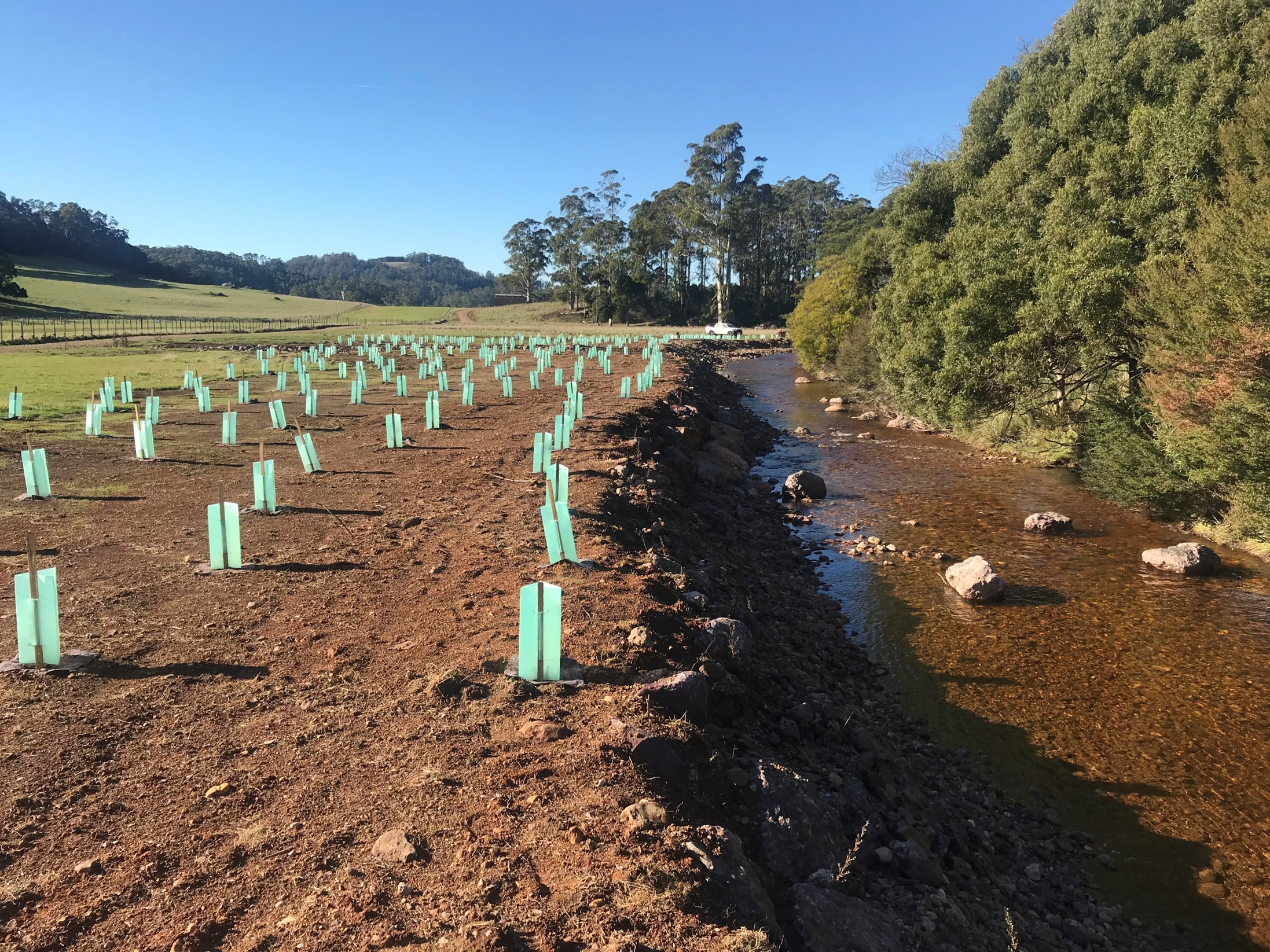
Tasmania’s three NRM Regions – NRM North, NRM South, and Cradle Coast NRM – led the implementation of NbS to rehabilitate agricultural land and enhance ongoing flood resilience after the devastating 2016 floods. Funded by the State Government, the work covered 20 local government areas, included 159 individual projects, and included actions like revegetation to rehabilitate riverbanks, riparian fencing, weed control, and in-stream structural works.
A decade on, the Tasmanian NRMs are now evaluating these works to understand how they have enabled ongoing flood resilience on primary production land. This new understanding is then being used to scale up and transfer the NbS to other flood-affected areas, enhancing flood resilience for community.
Community involvement is central to this project’s success, with all relevant landholders, communities, and stakeholders invited to learn about, contribute to, and benefit from the project.
The lessons from this project will also be shared across Australia, informing better policy, planning, decisions, and investment.
Hazard(s) addressed: Drought, flood, fire
Nature-based Solutions used: Waterway stabilisation and landscape rehydration