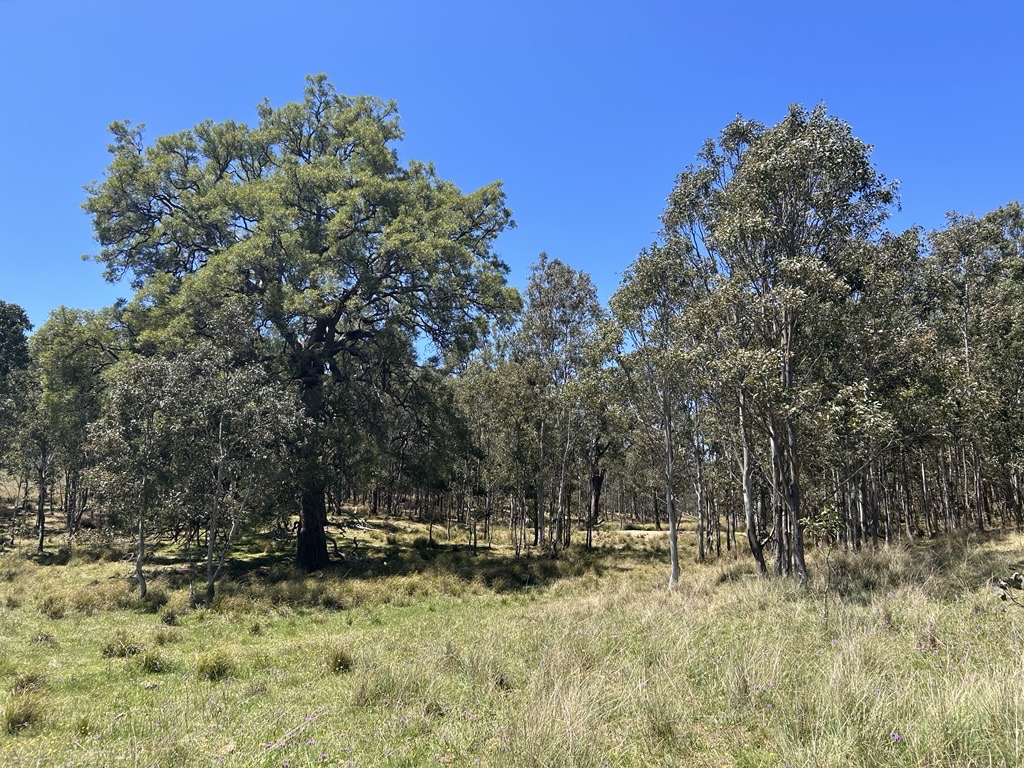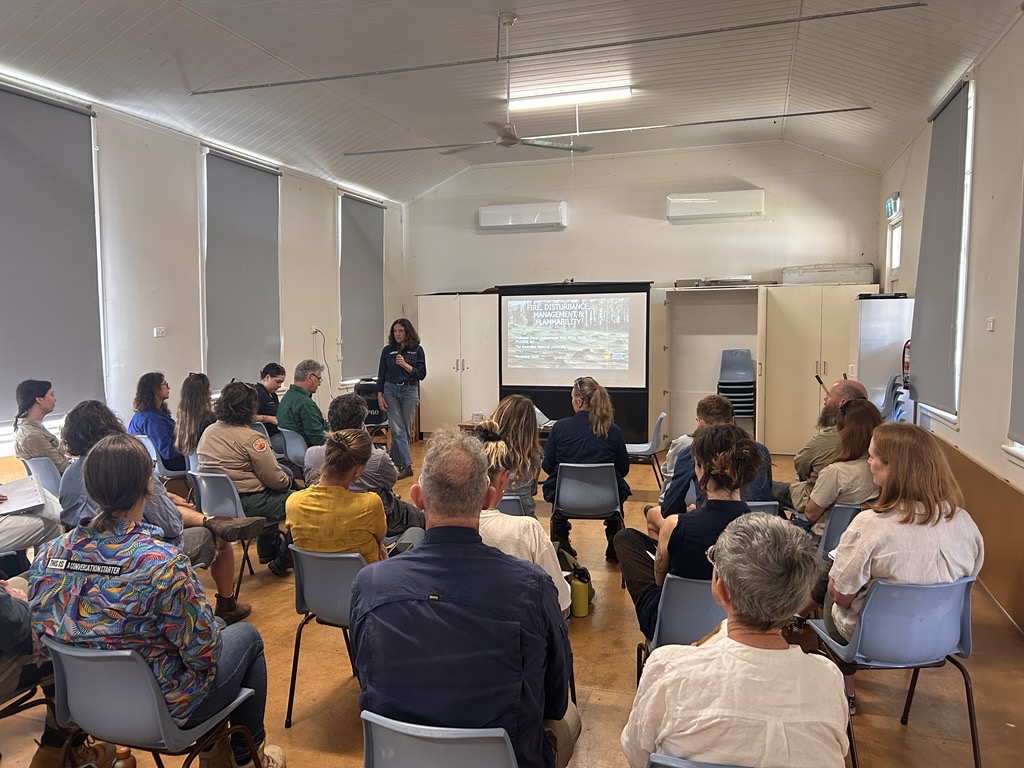
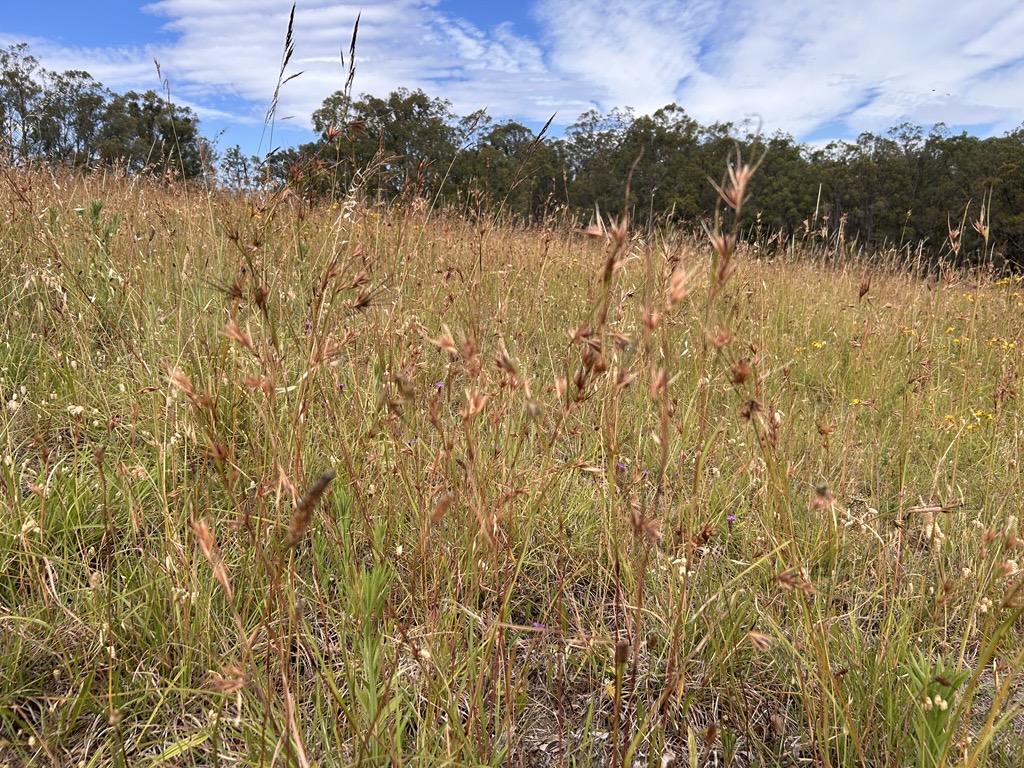

Lowland Grassy Woodland is present mainly in the Bega Valley but with very few intact remnants remaining. It is characterised by an open structure dominated by Forest Red Gum and a diverse understorey of grasses, herbs and forbs with few shrubs. Restoration techniques for this TEC in the past have included disturbance, such as fire or grazing, to prevent woody vegetation invading. Professor David Lindenmayer spoke about when this is and isn’t an appropriate management method.
Throughout the day David discussed a range of management issues such as the use and misuse of fire in managing forests, the value of regrowth timber especially as a remnant, considering the total disturbance burden of a site, the interactions between logging and fire, and interactions between threatened birds and forests of different ages. David drew from a wide range of literature including several large-scale, long-term studies.
After a presentation and lively discussion around cultural and ecological burning in coastal woodlands, the group headed out to 2 Lowland Grassy Woodland sites. The first site was a Travelling Stock Reserve where there is low grass diversity, a high cover of African lovegrass, and densely regenerating Forest Red Gums. Management actions being considered at this site are weed control, thinning and ecological burning. The second site is the largest intact remnant of Lowland Grassy Woodland located at the Bemboka River Reserve. The understorey there is largely intact and has had more regular management, such as burning and weed control. Future management will involve an ecological burn this winter and continued weed control.
Overall, the day was useful for discussing management options and techniques in a range of woodland types and scenarios. It is important to consider each site as a unique site and the context of the site within the landscape.