A landscape with high organic matter soils, wetlands and floodplains helps to absorb and store excess water in a landscape as a function of a healthy water cycle. These landscapes also aid in controlling flood severity. When these systems are damaged, the risk of landscape damage and flood following extreme rainfall increases. However, restoring these systems can significantly increase the ability of the landscapes to withstand extreme events again.
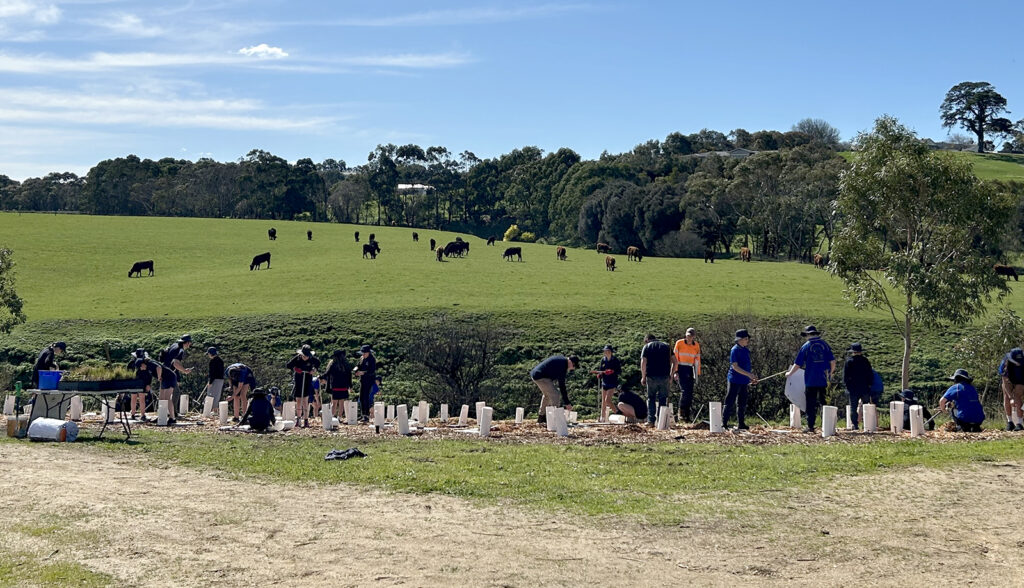
In this project, NACC NRM will implement revegetation, riparian stabilisation, and groundcover/fodder systems to stabilise soils, reduce the speed of water moving in the landscape, and support agricultural production. Drawing upon established principles of stabilisation and landscape rehydration, these efforts will reduce the loss of nutrients, soil, and carbon in the landscape, and simultaneously minimise the impacts of larger flood events.
Improving the water retention in landscapes can also support more green vegetation, which of itself can act as a ‘green’ fire break in the landscape. The project is focusing on riparian zones (streams and creeks) to address flood risks, and in doing so, will also foster green fire breaks in those areas, which will transect the landscape in a natural fashion. Revegetation works will focus on plant species that retain higher moisture contents and are less flammable to help reduce the overall fire risk in these agricultural landscapes, while maintaining strong biodiversity outcomes.
The collective works will not only reduce flooding locally but also have downstream benefits, such as protecting water quality, reducing sediment buildup, and lowering flood risks for communities and ecosystems further down the catchment systems . Similarly, by integrating more green spaces during dry months and utilising lower volatility plants, these sites can reduce the spread and severity of fire across the landscape.
Read more about NACC NRM