-

Drilling down on fertiliser to discover best practice

The uPtake project increased farmers’ confidence to use soil testing for decisions about fertiliser

Stories of NRM partners

A major project reviewing the application of phosphorus (P) on grazing pastures aims to give WA farmers more confidence in applying fertiliser when it’s needed, after tests showed almost 60% of paddocks in the southwest contain adequate or excessive levels of the phosphorus necessary for optimal production.

“I understand the drive to want what is best for the land, and the anxiety that a potential drop in productivity can cause. uPtake has been a great opportunity to build fertiliser management knowledge and help local farmers.”
– Rob McFerran, uPtake WA

The uPtake project in the state’s southwest is a collaboration between WA’s Departments of Water and Environmental Regulation and Primary Industry and Regional Development, fertiliser companies, agronomists, universities, farmers and NRM catchment groups, to clarify how to keep fertiliser on farm and reduce the runoff of excess phosphorus into local catchments.

The project aims to increase farmers’ confidence in using soil testing to support evidence-based fertiliser decisions. Field trials are underway to validate whether critical soil phosphorus values from previous national projects can be successfully applied to southwest WA.

uPtake trial coordinator Rob McFerran from the Department of Water and Environmental Regulation says 27 fertiliser trials in two years have shown that site data falls within a 95% prediction interval of the Better Fertiliser Decisions for grazing national data.

Fertiliser industry partners have also assisted with trial design, monitoring and measuring, he says, and the next 12 months will see an increased focus on communicating the results through field days and farm walks.

In the case study

Phosphorus, partnerships and practice change

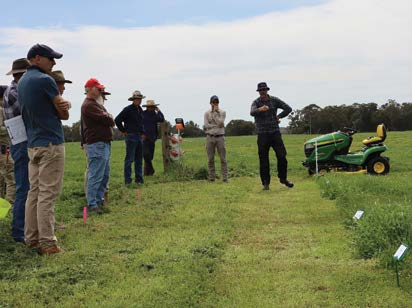
“Farmers will be able to physically see the different responses in the trials. We’ve demonstrated that if you apply more phosphorus to soils that already have adequate soil P, then absolutely nothing happens in terms of P response,” Rob explains.

“The decision to reduce rates or not apply phosphorus at all is seen as a risk by many dairy and beef farmers, but we hope that this project will give farmers confidence to trust the data and use it to make fertiliser decisions.”

uPtake is jointly funded by Healthy Estuaries WA and the National Landcare Program, and its title refers to the uptake of nutrients by plants, partnerships and practice change, with a capital P for phosphorus.

Rob says the combination of a broad range of partners is also beneficial.

“It’s a large and involved project and it’s building capacity through partnerships between farmers, agronomists, fertiliser companies, universities, government, water quality people and catchment groups to learn from each other,” Rob says.

“I’m at the top of my catchment and it’s really connected me from a water quality point of view — now I understand where water goes after it leaves my property, and that I can influence it before it reaches the aquifer or ocean or wetland.”

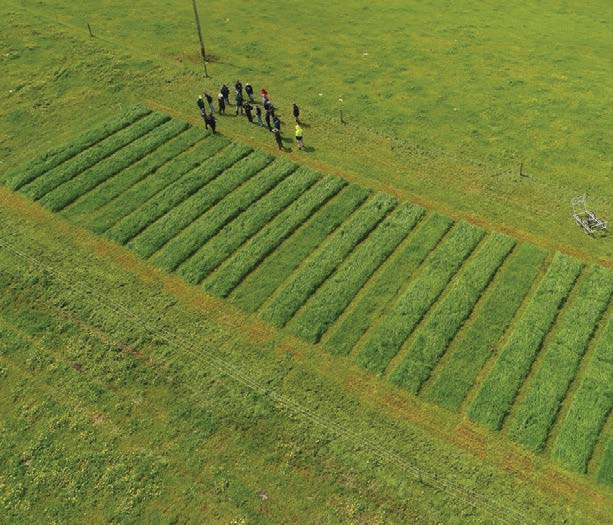
Trial coordinator Rob McFerran explains trial results to farmers in WA’s southwest

Royalties for Regions through Healthy Estuaries WA and the Australian Government National Landcare Program, in partnership with State Government, fertiliser, beef and dairy groups.

Available to read and download

Drilling down on fertiliser to discover best practice

The uPtake project increased farmers’ confidence to use soil testing for decisions about fertiliser
Case study · 2021
  • +2
Published: 1 June 2021
Secret Link